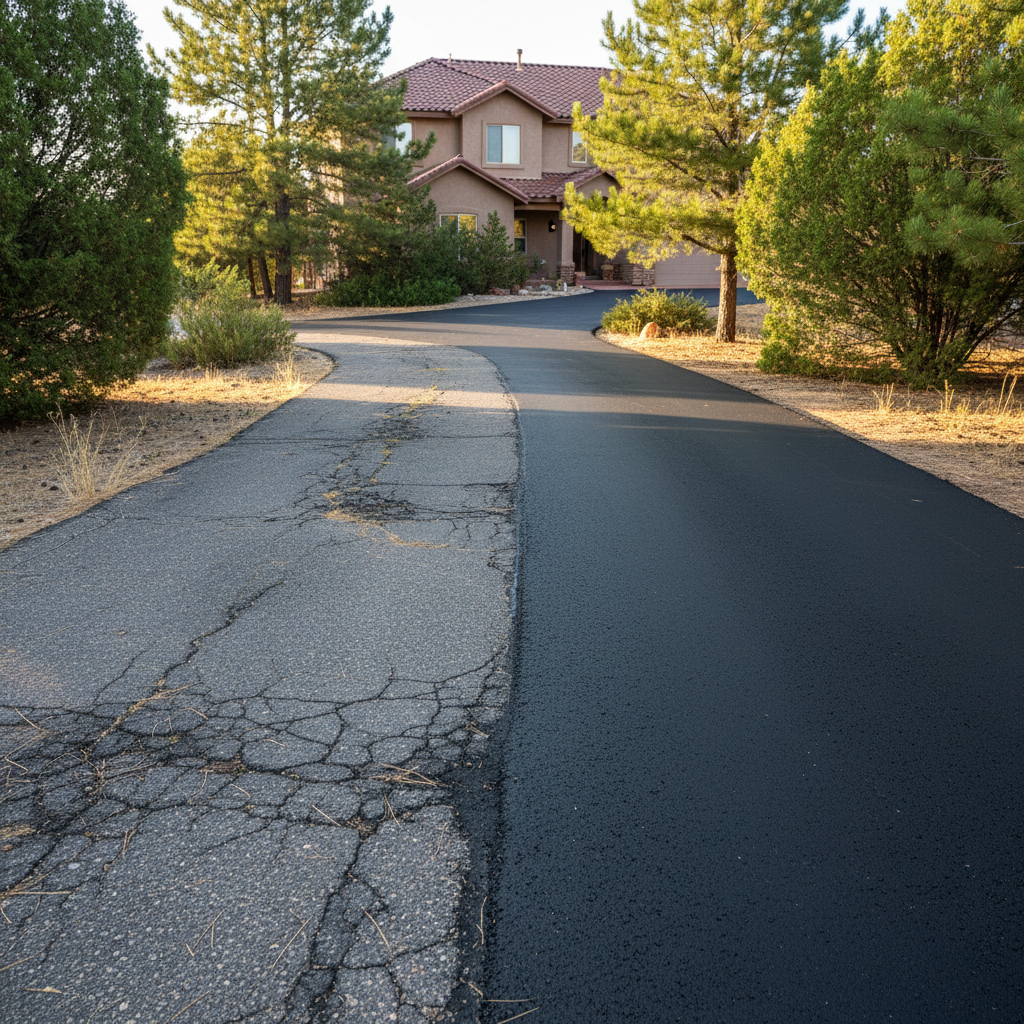
So, your driveway's seen better days, huh? Cracks, potholes, maybe it just looks tired. You're probably wondering if you need a whole new one or if there's a simpler fix. Around here in Flagstaff, I get this question all the time: should I go for an asphalt overlay or bite the bullet and get a full replacement?
It's a big decision, and honestly, there's no single right answer for everyone. It really depends on the condition of your existing pavement and what you're hoping to achieve. Let's break down the two main approaches.
Asphalt Overlay: The Quick Fix?
An asphalt overlay is basically putting a new layer of asphalt right on top of your existing one. Think of it like a fresh coat of paint, but for your driveway. Before we do that, we'll usually clean up the old surface, fill any major cracks, and sometimes mill down the edges so the new layer blends smoothly with sidewalks or garages. It's a popular option for a reason.
Cost
Generally, an overlay is going to be significantly cheaper than a full replacement. You're using less material and there's less demolition involved. This can be a real budget-saver, especially if you've got a long driveway or a large parking area.
Durability
Here's where it gets tricky. An overlay's durability is directly tied to the condition of the original asphalt underneath. If your old driveway has a really solid base and only surface-level issues, an overlay can last a good 8-15 years. But if the underlying problems are structural – like a failing base or extensive alligator cracking – those issues will eventually reflect through the new layer. It's called 'reflective cracking,' and it's a pain. Our freeze-thaw cycles up here in Flagstaff can really exacerbate those underlying issues, so we need to be careful.
Maintenance
Like any asphalt, an overlay will need regular sealing every 2-3 years to protect it from our harsh sun and winter weather. You'll also want to address any new cracks that form quickly to prevent water from seeping down to the old layer.
Appearance
A fresh overlay looks fantastic. It's smooth, black, and gives your property instant curb appeal. It's hard to tell it's not a brand new driveway just by looking at it.
Full Asphalt Replacement: The Long-Term Solution
A full replacement means we tear out all the old asphalt, re-grade and compact the sub-base, and then lay down entirely new asphalt. It's a more involved process, but it often gives you the best results in the long run.
Cost
No two ways about it, a full replacement costs more upfront. You're paying for demolition, hauling away debris, new base material, and more asphalt. It's an investment, plain and simple.
Durability
This is where full replacement shines. When you start with a fresh, properly prepared base, you're building a driveway that's designed to last. We're talking 15-25 years, sometimes even longer, especially if it's well-maintained. We can also ensure the drainage is perfect, which is crucial for preventing issues with snowmelt and monsoon rains around neighborhoods like Cheshire or Fort Tuthill.
Maintenance
Just like an overlay, a new driveway needs regular sealcoating. But because the base is solid, you're less likely to see major structural issues develop quickly. You'll still need to fill cracks as they appear, but they should be fewer and farther between.
Appearance
A brand new asphalt driveway looks perfect. It's uniform, smooth, and has that deep black finish that just screams quality. You won't have to worry about old cracks showing through.
My Recommendation for Flagstaff Homeowners
Look, if your existing driveway has minor surface cracks, fading, or just needs a facelift, an overlay can be a great, cost-effective option. It'll buy you a good chunk of time and make your property look sharp.
However, if your driveway has widespread alligator cracking, significant potholes, areas that are sinking, or if water pools in certain spots, then an overlay is probably just a band-aid. Those underlying problems aren't going away, and they'll eventually ruin your new top layer. In our Flagstaff climate, where we deal with heavy snow, freezing temperatures, and then hot summers, a solid foundation is absolutely critical. Water ingress from cracks can turn into ice lenses in the winter, heaving your pavement and causing major damage.
For most Flagstaff homeowners facing extensive damage, my honest recommendation is to go for a full asphalt replacement. It's more money upfront, but you're getting a truly durable solution that's built to withstand our unique weather patterns. You'll have peace of mind knowing your driveway is solid from the ground up, and you won't be dealing with costly repairs down the road that an overlay just couldn't prevent. It's the smarter long-term investment for a property that will stand up to our mountain environment.
Give us a call at Flagstaff Asphalt Construction. We'll come out, take a look at your driveway, and give you an honest assessment of what we think is the best approach for your specific situation. No pressure, just good advice.