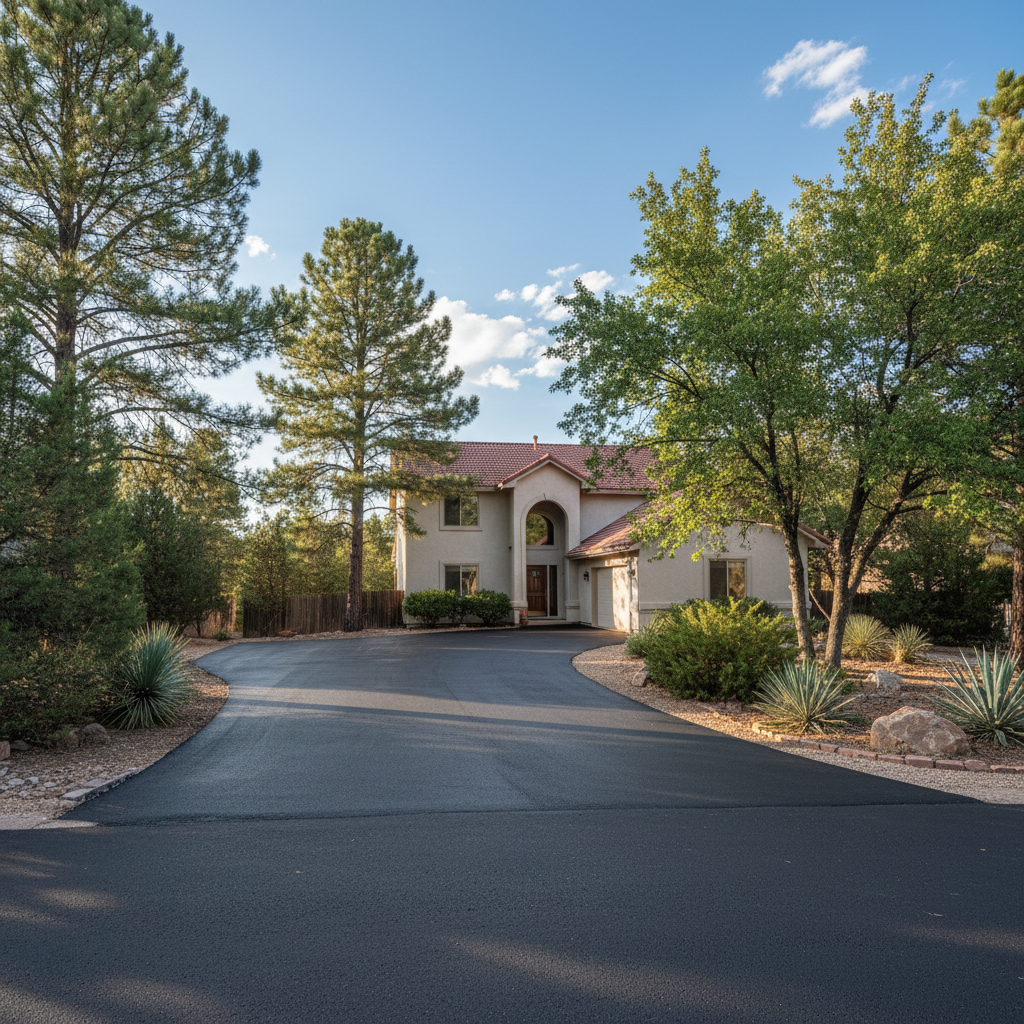
Alright, Flagstaff homeowners, let's chat about your asphalt driveway. I bet you've noticed plenty of folks around town, maybe even your neighbors over in Doney Park or Kachina Village, getting their asphalt slurry coated. It's a smart move, really, for protecting what you've got. But up here, with our crazy weather, you can't just slap it on whenever. Timing is super important if you want that slurry coat to actually work and last.
So, When's the Best Time to Get Your Driveway Slurry Coated in Flagstaff?
This is probably the question I hear most often. You really need to find that sweet spot in the year when the weather's playing nice. For us here in Flagstaff, that generally means sometime between late spring and early fall. Think of it as a window of opportunity, not just one specific day.
- Late Spring (May-June): This can be a good time, but you really have to watch those overnight lows. Sure, daytime temperatures start climbing into the 60s and 70s, but our nights can still get pretty chilly, can't they? You need consistent temperatures, day and night, for the slurry to cure correctly.
- Summer (July-August): This is often ideal, but there's a big catch: monsoon season. We'll get into that in a minute. If you can snag a stretch of dry, warm days before those afternoon storms roll in, you're golden. Flagstaff's summer days usually don't go above 85°F, which is just perfect for this kind of work.
- Early Fall (September-October): Another excellent window. The intense summer heat starts to back off, but we still have plenty of warm, sunny days. Just like in spring, keep an eye on those overnight temperatures as we get closer to November.
The main thing to remember? You need temperatures consistently above 50°F—for both the air and the pavement—for at least 24 to 48 hours after we apply it. If it dips below that, especially if it's dropping fast, the slurry won't cure right, and you'll just be throwing money away. What a waste.
Weather Conditions That Make or Break Your Slurry Coat
It's not just about temperature, you know. A few other weather factors really influence how well your slurry coating takes hold and how long it actually lasts.
Rain, Rain, Go Away
This one's pretty obvious, right? You absolutely cannot put down slurry seal if rain is coming soon or if there's standing water on the pavement. If it rains too quickly after we apply it, before it's had a chance to cure, it can wash away the emulsion. That leaves you with a big mess and a job that just failed. Our monsoon season typically runs from mid-June through September, with July and August being the wettest months. So, if you're thinking about a summer application, we're checking those forecasts like crazy, sometimes even rescheduling if there's a high chance of those famous afternoon Flagstaff thunderstorms.
Humidity and Wind
These two kind of go hand-in-hand. Slurry seal needs to dry, and that means the water in the mix has to evaporate. High humidity makes that whole process much slower. If the air is already full of moisture, the slurry will take forever to dry, which can cause problems with how it sticks and how durable it is. Ideally, we're looking for humidity levels below 50%, though sometimes we can make it work with up to 70% if everything else is perfect.
Wind can be tricky. A light breeze, say around 4 mph, actually helps because it moves the air around and speeds up drying. But too much wind? That's a problem. Strong winds can mess with the spray pattern, leading to uneven application and a spotty finish. It can also make the slurry dry too fast on the surface, creating a crust that traps moisture underneath, which can lead to cracking later on. Plus, nobody wants slurry overspray on their car or landscaping, right?
Sunlight is Your Friend
Direct sunlight really helps the slurry cure properly. It's not just about warmth; the UV rays actually play a part in the chemical curing process. Overcast days, especially if they're also humid, will make drying times much, much longer. That's why we often suggest sealing on clear, sunny days.
Protecting Your Investment Year-Round
Once your slurry coat is down and cured, you've added a super important protective layer that can extend your asphalt's life by 5-7 years. But the work doesn't stop there. Flagstaff's climate is tough on asphalt, with intense UV radiation, big temperature swings, and those brutal freeze-thaw cycles.
- Keep it Clean: Regularly sweep or blow off debris, dirt, and pine needles. Organic matter can hold moisture against the asphalt, leading to degradation.
- Address Spills Immediately: Oil, gas, and other automotive fluids can break down asphalt. Clean up any spills as soon as you spot them.
- Watch for Cracks: Even with slurry coating, small cracks can show up over time. Catch them early and get them filled. Water is asphalt's worst enemy, and our freeze-thaw cycles here are particularly damaging. Water seeps into cracks, freezes, expands, and then thaws, making those cracks bigger and eventually causing potholes.
- Snow Removal: Be careful with snowplows and shovels. Try to avoid scraping directly on the asphalt surface, especially with metal blades, as this can damage the slurry coat.
- Reapply on Schedule: Slurry coating isn't a one-and-done deal. To get the most out of your asphalt, plan to reapply every 5-7 years. This kind of proactive maintenance will save you a lot of money in the long run compared to letting your driveway get so bad it needs expensive repairs or even a full replacement.
Here at Flagstaff Asphalt Construction, we really get the unique challenges our high-altitude environment throws at your pavement. We're here to help you make the right decisions for your asphalt, making sure it stays strong and looks good for years to come.