When should I consider patching my asphalt driveway or parking area?
You should really start thinking about patching the moment you spot any significant cracking or potholes. Seriously, don't wait until it looks like the Grand Canyon out there. Small cracks, especially that "alligator cracking" — you know, those interconnected, web-like patterns — are a huge red flag. Potholes, well, those obviously need fixing right away. The longer you put it off, the worse things get, and what could have been a simple patch job quickly turns into a much bigger, more expensive repair or even a full replacement.
Just consider this: water is asphalt's worst enemy. When it sneaks into those cracks, freezes, and then expands – which happens a lot here in Flagstaff with our winter thaws and freezes – it just pushes the asphalt apart. Then it thaws, more water gets in, and the whole cycle repeats. That's how a small crack can become a giant pothole overnight. Catch it early, and you'll save yourself a headache, plus some cash.
What's the difference between a temporary patch and a permanent repair?
This is a big one, and it's where a lot of folks get confused. A temporary patch, often called a 'cold patch,' is usually just a quick fix. You can grab bags of it at the hardware store. You just dump it into a pothole, tamp it down, and it'll hold for a little while. It's great for emergencies, like if you've got a dangerous hole that needs filling immediately before someone trips or damages their car. But it won't last. It doesn't really bond with the existing asphalt, and it's prone to breaking apart, especially under heavy traffic or our famous freeze-thaw cycles.
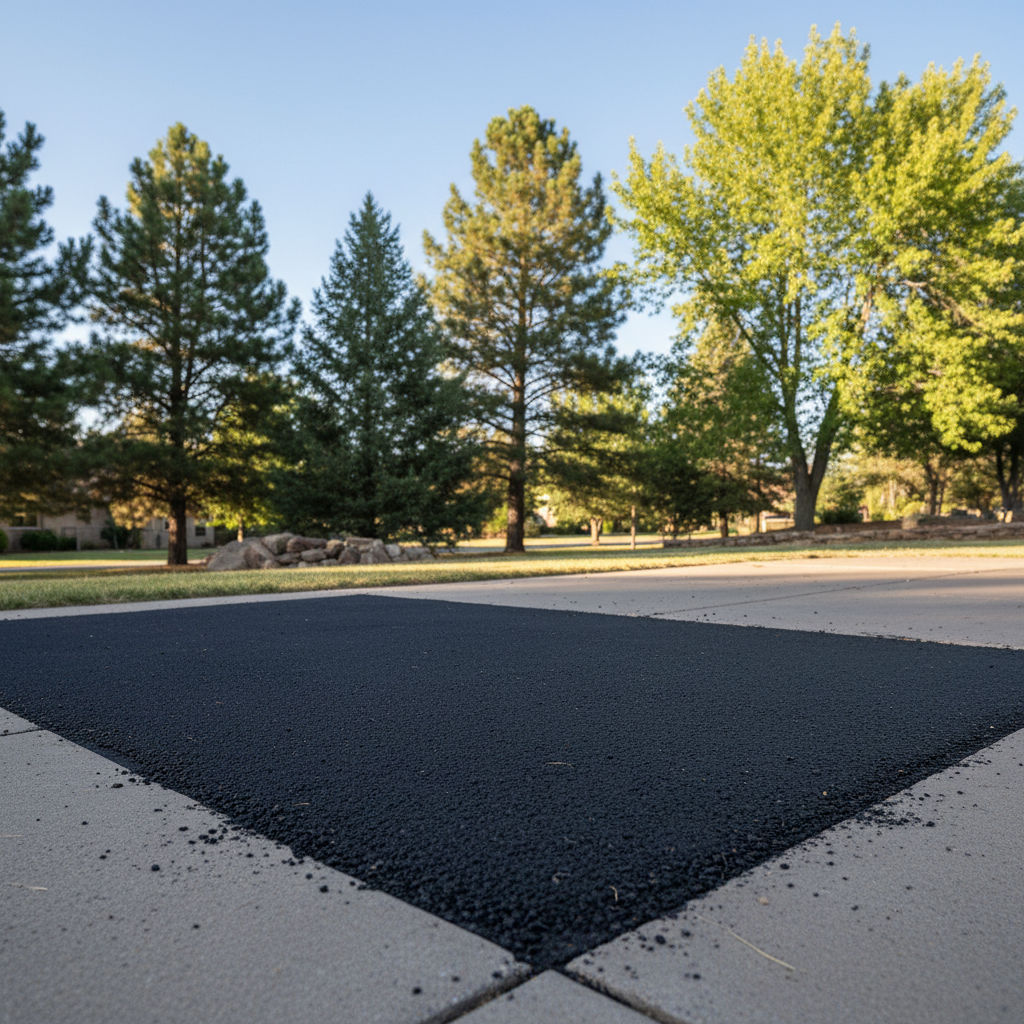
A permanent repair, on the other hand, means we actually remove the damaged asphalt all the way down to a solid base. We're talking about cutting out a clean, square or rectangular section around the problem area. Then we get the base ready, put down a tack coat (that's an adhesive layer), and fill it with hot asphalt mix, compacting it really well. This creates a strong, durable bond with the surrounding pavement and is built to last for years. It's a proper repair, not just a band-aid.
Can I just fill cracks with crack filler, or do I need a patch?
It really depends on the size and type of crack. If you've got narrow, linear cracks – say, less than half an inch wide – crack filling is usually the way to go. We clean out the crack thoroughly, then pour in a specialized hot rubberized sealant. This sealant stays flexible, expanding and contracting with the asphalt as temperatures change, which is super important for our fluctuating Flagstaff weather. It stops water from getting into the base layer, and that's the main goal.
However, if your cracks are wider than about half an inch, or if you're seeing extensive spiderwebbing (that alligator cracking again) over a bigger area, crack filling just isn't enough. At that point, the base underneath is probably compromised, and you'll need a proper patch. Trying to just fill wide or complex cracks is like trying to put a band-aid on a broken bone – it won't solve the real problem, will it?
How long does an asphalt patch typically last?
A properly installed, permanent asphalt patch should last for many years, often as long as the surrounding pavement, maybe even longer. We're talking 5 to 10 years, sometimes more than that. The key, though, is that 'properly installed' part. If the base isn't prepared correctly, if the wrong material gets used, or if it's not compacted enough, it simply won't hold up. That's why it's so important to have experienced pros, like us at Flagstaff Asphalt Construction, do the work.
Temporary cold patches? You'd be lucky if they last a few months, especially with snowplows and heavy vehicles driving over them in the winter. They're really just for buying you time until a permanent repair can be done.
What factors affect the cost of asphalt patching?
A few things come into play here. First, there's the size and depth of the area that needs fixing. A small, shallow pothole is obviously less work and material than a large section of deep alligator cracking. Second, the type of repair itself – a temporary cold patch is cheap, but you truly get what you pay for. A permanent hot asphalt patch is more involved and costs more upfront, but it's a much better investment.
Access to the area can also be a factor. If it's a tight spot that's tough to get equipment into, that might add a bit to the labor. The condition of the underlying base also matters. If we cut out a patch and find the base is completely shot, that's extra work to fix before we can lay new asphalt. Our local material costs and labor rates in Flagstaff are also part of the equation, just like any other trade.
Can I patch my asphalt myself, or should I hire a professional?
For small, temporary cold patches, sure, you can do it yourself. If you've got a single, isolated pothole and just need to make it safe for a bit, buying a bag of cold patch and tamping it down is totally doable. Just know it's not a lasting solution.
For any permanent repair, especially anything that involves cutting out sections, hot asphalt, and proper compaction, you really need to hire a professional. It requires specialized equipment – asphalt saws, jackhammers, plate compactors, asphalt hot boxes – and the expertise to know how to prepare the base, apply the tack coat, lay the hot mix correctly, and compact it to the right density. If it's not done right, you'll be patching the patch in a year or two, and that's just throwing good money after bad. We've got the tools and the know-how to make sure it's done right the first time.